Opsera Launches BrickForge, a Purpose-Built AI Operational Command Center for Enterprise Data Teams

Available on Databricks Marketplace

Opsera vs. DX: Broader Data. Native Governance. Investment Intelligence.

DX measures AI adoption, developer experience, and SDLC performance well. Opsera extends into governance, enforcing policy, acting on findings, and connecting engineering output to investment decisions your Finance team can use.

Opsera vs DX

Context: The Atlassian Acquisition

DX was acquired by Atlassian in late 2025. For organizations evaluating DX, this introduces considerations worth weighing:

  • Future product roadmap decisions will be influenced by Atlassian’s priorities
  • Integration depth with non-Atlassian tools (GitHub, Azure DevOps, ServiceNow) may narrow over time
  • Pricing and packaging are subject to change under Atlassian’s commercial model
  • Data hosted on Atlassian infrastructure; relevant for organizations with data sovereignty requirements

If your engineering stack is fully Atlassian (Jira, Confluence, Bitbucket) DX may seem like a natural choice. If your stack includes ServiceNow, Salesforce, AWS, or non-Atlassian tools, vendor agnosticism matters.

Atlassian

What DX does well

DX provides excellent developer sentiment surveys, qualitative developer experience measurement, and strong integration with the Atlassian ecosystem. The DX Core 4 framework measures Speed, Effectiveness, Quality, and Impact, which is a balanced approach combining delivery performance metrics with a developer experience layer that is research-backed and well-regarded.

Where DX falls short

DX integrates with many tools beyond Atlassian, but was built with Atlassian as its primary motion and is now owned by Atlassian, which creates roadmap risk for non-Atlassian users. It lacks dedicated security scanning integration and vulnerability tracking. On the deployment side, DX captures DORA-level deployment metrics (frequency, change lead time) but does not provide deep CI/CD pipeline telemetry such as stage-level performance, cross-platform pipeline views across GitHub Actions, Jenkins, or Harness, or pipeline-level security gate data. It has no on-prem deployment option (discontinued under Atlassian’s cloud-native model), and cannot fix problems, only surface them. Its investment reporting covers R&D capitalization, engineering allocation, and AI Dollar Impact but lacks the breadth of Opsera’s Investment Spectrum.

Where Opsera wins

Opsera is vendor-agnostic, covers the full SDLC including build, test, security, and deployment data, tracks AI tool adoption and its outcomes, offers on-prem deployment, and can fix problems as well as identify them.

Side-by-Side Comparison

DXOpsera
Developer sentiment surveys
SPACE framework support
DORA metrics
AI tool usage tracking
(vendor agnostic)
Full SDLC Coverage
Partial (no deep CI/CD pipeline telemetry or cross-platform pipeline views; no dedicated security scanning integration)
On-prem option
Vendor-agnostic
Multi-tool, Atlassian-primary
Investment Spectrum (software capitalization, resource allocation, planned/unplanned)
Partial (no planned/unplanned analysis, resource cost allocation depth, flow metrics, or developer focus summaries)
Autonomous remediation

From Insight to Action

DX surfaces what’s happening and can proactively alert teams through Pulse, its weekly signal delivery to Slack or Teams. But alerting and governing are different things. Opsera’s governance layer acts on findings directly, with bi-directional integrations routing security findings, enforcing policy before code merges, and governing what agents are permitted to do in the delivery pipeline, without waiting for a human to read a dashboard and decide what to do next.

What Your AI Can Actually See

DX AI answers questions about what DX collects. Hummingbird AI draws from the full delivery lifecycle: pipeline security events, deployment outcomes, Investment Spectrum data, and incident signals that DX doesn’t ingest. When you ask why delivery stability dropped last quarter, the answer depends entirely on what your AI can actually see.

Engineering Investment Visibility

DX provides R&D Capitalization, Engineering Allocation, and AI Dollar Impact. Opsera’s Investment Spectrum covers those dimensions and adds what DX doesn’t: planned vs. unplanned work analysis, resource cost allocation by team and initiative, software capitalization with full historical trends, flow metrics, and developer focus summaries. When the CFO’s question extends beyond AI ROI to how engineering budget was allocated across all initiatives, and whether that allocation matched strategic priorities, Investment Spectrum covers more of that ground.

Governing Agents, Not Just Measuring Them

As AI agents take on more of the delivery workflow, the question shifts from adoption to oversight: what are agents permitted to do, and what did they actually do? Opsera governs what agents are permitted to do in the delivery pipeline, enforces policy on AI-generated code before it merges, and provides the audit trail your compliance and security teams require. Specialized agents fulfilling security, compliance, and architecture roles among others, run directly from the IDE with flexible triggers including pre-commt, ensuring issues are fixed before they are committed. DX measures AI adoption and impact well, but doesn’t extend into policy enforcement or agentic oversight.

Vendor Agnosticism

DX integrates with tools beyond Atlassian (including GitHub and GitLab) and has publicly committed to maintaining those connectors post-acquisition. The open question is whether that commitment holds as Atlassian’s roadmap priorities evolve. Opsera’s vendor agnosticism isn’t a promise contingent on an acquirer’s priorities – it’s the core architecture.
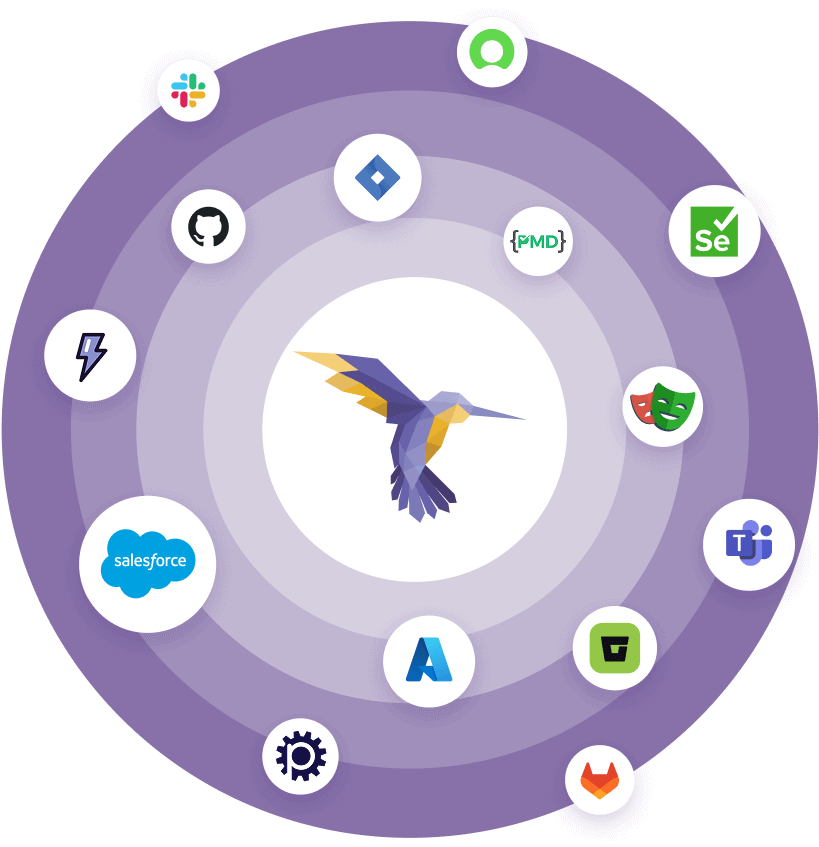

Opsera integrates with every tool in your Salesforce ecosystem
  • Allstate
  • Cepheid
  • Cisco
  • City of Hope
  • Couchbase
  • Cummins
  • Dish
  • Eaton
  • Honeywell
  • Infoblox
  • Marvell
  • Nokia
  • LifeLock by Norton
  • Palo Alto Networks
  • PG&E - Pacific Gas and Electric Company
  • Qualys
  • Sephora
  • Siemens
  • Uber

Common Questions

DX connects to GitHub and other non-Atlassian tools. Is the ecosystem concern overstated?

DX does connect to tools outside the Atlassian stack today, and we want to be fair about that. Our concern is forward-looking: now that DX is owned by Atlassian, its integration roadmap will increasingly be shaped by Atlassian’s priorities. We’re built as a vendor-neutral platform with no ecosystem dependency, and that won’t change.

Gartner recognized us specifically for Innovation, such as closing the gap between productivity data and execution through autonomous, policy-governed actions. DX was flagged for lacking “strong automation and active intervention capabilities.” In plain terms: DX tells you what’s happening; we can do something about it.

DX’s Core 4 Framework includes a solid survey-based developer experience score. We go further by implementing DORA, SPACE, and DevEx together in a single connected data layer, so developer experience signals sit alongside delivery metrics and investment data rather than living in a separate module.

Opsera’s “Insights in a Box” delivers full Unified Insights capability on-premises, including DORA, SPACE, DevEx, AI impact dashboards, and Investment Spectrum, with no data leaving your environment. DX’s on-premises option has been discontinued under Atlassian’s cloud-native model. For organizations with data sovereignty requirements, Opsera is currently the only DPIP Leader with a true on-premises deployment path.

At the time of the Gartner MQ evaluation, DX had gaps in SOC 1 and BSI C5. Opsera had SOC 2 Type 2 and CyberGRX (ISO-27001 equivalent) certification with more in process. For regulated verticals, we recommend confirming current status with both vendors rather than relying on point-in-time MQ data.

Both platforms measure AI adoption and impact. Where we differ is governance: Opsera enforces policy on AI-generated code before it merges, and we manage the actions of AI agents operating in your pipelines. DX provides measurement and the DX AI Measurement Framework, but doesn’t extend into policy enforcement or agentic workflow governance.

DX provides R&D Capitalization, Engineering Allocation, and AI Dollar Impact, which are useful for understanding investment categories and modeling AI ROI. Opsera’s Investment Spectrum covers those dimensions and adds planned vs. unplanned work analysis, resource cost allocation across teams and initiatives, flow metrics, and developer focus summaries for a more complete picture of where engineering budget actually went and whether it matched priorities.

If your entire delivery lifecycle runs within the Atlassian stack, DX’s native integration can be a real advantage. Most enterprises have tools outside the Atlassian ecosystem, such as a legacy or M&A project that uses a different SCM, CI/CD provider or security tool. In such cases, we recommend asking Atlassian how much of your delivery lifecycle DX actually sees. Our vendor-neutral architecture means every tool contributes to the same connected data picture.

Opsera’s integration breadth, spanning build pipelines, security scanners, CI/CD tools, deployment systems, and HRIS across heterogeneous toolchains, means initial configuration is more involved than platforms with narrower data scope. We provide structured onboarding to configure integrations correctly and ensure data quality from day one. Teams evaluating time-to-first-insight should factor implementation depth into their evaluation timeline; we’d recommend a scoped pilot as the best way to assess fit for your specific environment.

Book a Comparison Demo