
Amazon had a week it would rather forget.
Let me say the quiet part out loud
Amazon, the company that pioneered modern DevOps practices, wrote the book on CI/CD, runs the cloud infrastructure powering a large portion of the internet, and has spent decades perfecting the mechanics of large-scale software delivery, got caught flat-footed by AI-generated code.
Let that sink in.
Reports indicated that Amazon experienced multiple outages, including an incident where customers were unable to check out for several hours. Some estimates suggested that millions of orders may have been impacted during the disruption.
Internal reports described the incidents as having a “high blast radius” and linked them to “GenAI-assisted production changes,” noting that “best practices and safeguards are not yet fully established.”
Following the incidents, Amazon retail SVP Dave Treadwell reportedly called an internal “deep dive” meeting, emphasizing the need to “regain their strong availability posture.”
Amazon is now rolling out a 90-day reset, requiring dual sign-offs on code changes and mandating extra reviews specifically for AI-assisted production changes.
What Actually Went Wrong
Here’s the part that got buried in much of the reporting.
An AI agent followed advice from an old internal wiki, stale documentation that hadn’t been updated in who knows how long, and ran with it. Right into production.
No one caught it. Not in code review. Not in the pipeline. Not in a compliance check. The AI was confident, the humans trusted the AI, and the guardrails simply weren’t there.
Let’s pause for a moment and consider what that means.
If the organization that helped define modern DevOps can get caught off guard by AI-assisted code, every enterprise should pay attention.
This Is Not an Amazon Problem, It’s an Industry Problem
Amazon is not alone.
What happened there is not an isolated incident. It’s a preview of a broader shift already underway across the industry.
Over the past two years, AI coding assistants have fundamentally changed how code is written. Tools like GitHub Copilot, Amazon Q, Cursor, Claude Code, and Gemini are now embedded directly into developers’ workflows.
The impact on productivity is real.
Developers are generating code faster than ever before. Features that once took weeks can now be prototyped in days. Internal teams across the industry are reporting development cycles accelerating 2x, 5x, sometimes even 10x, compared to just a few years ago.
But something important happened along the way.
The speed of code generation changed almost overnight. But the systems designed to govern that code did not. And when that gap widens, the risks grow just as quickly. Because speed without governance is just a faster way to break things.
The Structural Problem: AI Broke the DevOps Balance
The real issue here isn’t AI-generated code.
The real issue is that AI changed the speed of software development, while the systems designed to govern it stayed largely the same. And that imbalance is starting to show.
The Bigger Picture Nobody’s Talking About
AI can generate code remarkably well. But it does so without the context that experienced engineers rely on every day.
It doesn’t know the history of your system. It doesn’t know why certain architectural decisions were made. It doesn’t understand fragile dependencies buried deep in the stack. And it certainly doesn’t know compliance patterns your organization depends on. It doesn’t know that the wiki it just read hasn’t been updated in years.
AI writes code like a brilliant new hire who has read every Stack Overflow thread on the internet, but hasn’t spent a single day inside your codebase.
That context gap is where risk starts to creep in.
The Velocity Trap
AI tools dramatically accelerated what developers call the inner loop of software development: writing code, committing changes, and opening pull requests.
But the outer loop, the process of reviewing those changes, validating architecture, checking security, ensuring compliance, and approving deployments, has not evolved at the same pace.
And when a ten-lane highway of code generation feeds into a two-lane road of governance, bottlenecks and mistakes are inevitable. The result is exactly what Amazon experienced: a velocity gap that becomes a risk gap.
And here is the part that makes this structurally dangerous: AI-generated code looks perfectly syntactically correct.
It compiles. It passes unit tests. It does what it was asked to do in isolation. What it cannot always guarantee is how it behaves at scale, how it interacts with the systems around it, whether it introduces a security vulnerability three dependency layers deep, or whether the architecture decision it made silently contradicts a design principle made six months ago.
That is not a failure of AI. It’s a failure of governance infrastructure that wasn’t built for AI velocity.
The PR Approval Crisis
Amazon’s response was to require senior engineer sign-offs on AI-assisted changes. That is a reasonable immediate reaction. But it is also, fundamentally, a human bandwidth solution to a machine-speed problem.
Now think about what a PR reviewer is expected to do today.
- Review hundreds or thousands of lines of AI-generated code
- Understand the architectural impact across a complex system
- Spot security vulnerabilities
- Validate compliance requirements
- Assess deployment risks
And do all of that quickly, because the development velocity is expected to remain high. That burden was already heavy before AI coding tools.
Now the volume of code has multiplied. And simply asking humans to review faster doesn’t scale.
Why the Industry Needs Agentic DevOps
So, the question isn’t whether enterprises should slow down AI-assisted development. They shouldn’t. The productivity gains are too significant, and the competitive pressure is too real. Organizations are not going to ask developers to write less code or move slower simply because AI tools made development faster.
The real question is this: how do you govern software delivery at AI speed?
If software is now being generated at machine speed, the systems that govern that software must operate at machine speed as well.
That means upgrading the outer loop with:
- Architecture validation
- Security analysis
- Compliance verification
- Dependency risk assessment
These activities can no longer rely entirely on manual review after the fact. They need to happen automatically, continuously, and in context, before risky changes reach production.
This is where a new model is beginning to emerge: Agentic DevOps.
Instead of expecting human reviewers to analyze every detail of increasingly complex code changes, specialized AI agents perform the deep analytical work first.
Human engineers remain in control. But they are no longer acting as detectives searching for hidden risks. They become decision-makers reviewing a change that has already been analyzed.
Machines handle the analysis. Humans make the decisions. That shift is what makes AI-assisted development sustainable and secure.
Why We Built Opsera’s Agentic DevOps Platform
I’m not going to be subtle here.
Incidents like the one Amazon experienced are exactly why we built Opsera’s Agentic DevOps platform.
When AI generates code, the real question isn’t just “Does this code compile?”
The real questions are:
- What systems does this change affect?
- Does it introduce architectural drift?
- Does it expose vulnerabilities several dependencies deep?
- Does it violate compliance controls the organization depends on?
Those questions cannot be answered by quickly scanning a PR. They require deeper analysis. That’s why Opsera’s Agentic DevOps platform introduces specialized AI agents that perform this analysis automatically before changes reach production.
The Architecture Analyzer Agent
The Architecture Analyzer examines a change in the context of the entire system.
It maps dependencies, identifies the services and components affected by the change, and evaluates whether the modification introduces architectural drift — patterns that conflict with how the system was designed to operate.
In situations like the Amazon incident, this type of analysis could flag a change that doesn’t align with established architecture before it ever reaches production.
The Security Scan Agent
The Security Scanner automatically evaluates code changes for potential vulnerabilities.
It performs SAST analysis, detects exposed secrets or credentials, and identifies vulnerable dependencies that may be introduced through the change.
This happens automatically, long before a deployment pipeline is triggered.
The Compliance Audit Agent
Modern software development is tightly connected to regulatory requirements — SOC2, PCI-DSS, HIPAA, GDPR.
The Compliance Auditor maps every change against the controls that matter to the organization and flags violations immediately.
Issues that might otherwise surface weeks later during an audit are caught in seconds.
The SQL Security Scan Agent
Changes affecting the data layer require additional scrutiny. The SQL Scanner evaluates database queries and schema changes for injection risks, performance issues, and potential exposure of sensitive data.
Again, the goal is not to replace human engineers. The goal is to ensure that by the time a pull request reaches a human reviewer, the heavy analytical work has already been done.
Humans make the decisions. Agents handle the analysis.
What a Pull Request Looks Like With Opsera vs Without
To understand the difference, look at what a typical pull request reviewer sees today.
Without additional context, reviewers are often asked to approve large changes with very limited information. The code compiles. Unit tests pass. But the deeper questions — architectural impact, security exposure, compliance implications — are often left to manual investigation.
Here’s how that experience changes when the analytical work is handled by Opsera AI agents.
| Without Opsera | With Opsera |
|---|---|
| PR arrives with code diff and minimal context | PR arrives pre-analyzed by AI agents |
| Reviewers rely on unit tests and manual inspection | Architecture impact summary shows affected systems |
| Little visibility into dependency chains | Dependency graph highlights upstream and downstream impact, blast radius |
| Security issues must be identified manually | Automated security results flag vulnerabilities |
| Compliance checked later in the pipeline | Compliance status mapped to frameworks, identifying alignment and policy violations |
| Deployment risk based on intuition | Deployment risk profile highlights failure scenarios |
| Little insights into how change alters system | Sequence flow diagrams give visual representation of how the change modify system behavior |
The result: Approvals become faster. Confidence becomes higher. And the chances of risks reaching production drop dramatically.
Upgrading the Outer Loop to Match the Inner Loop
The Amazon incident is a preview of what every enterprise will face as AI coding adoption deepens.
Organizations must upgrade the outer loop to match the speed of the inner loop — using agentic intelligence that makes every PR smarter, every approval faster, and every deployment safer.
That shift requires a few important changes:
- Shifting outer loop activities left: architecture validation, security scanning, compliance checks, and dependency analysis happen before code enters the pipeline, not after it reaches production.
- Giving PR approvers better visibility: every review arrives with a complete analytical package prepared by specialized agents.
- Keeping humans in control: agents perform the analytical work, while engineers make the final decisions.
- Building governance infrastructure for AI development: not as a constraint on velocity, but as the foundation that makes that velocity sustainable.
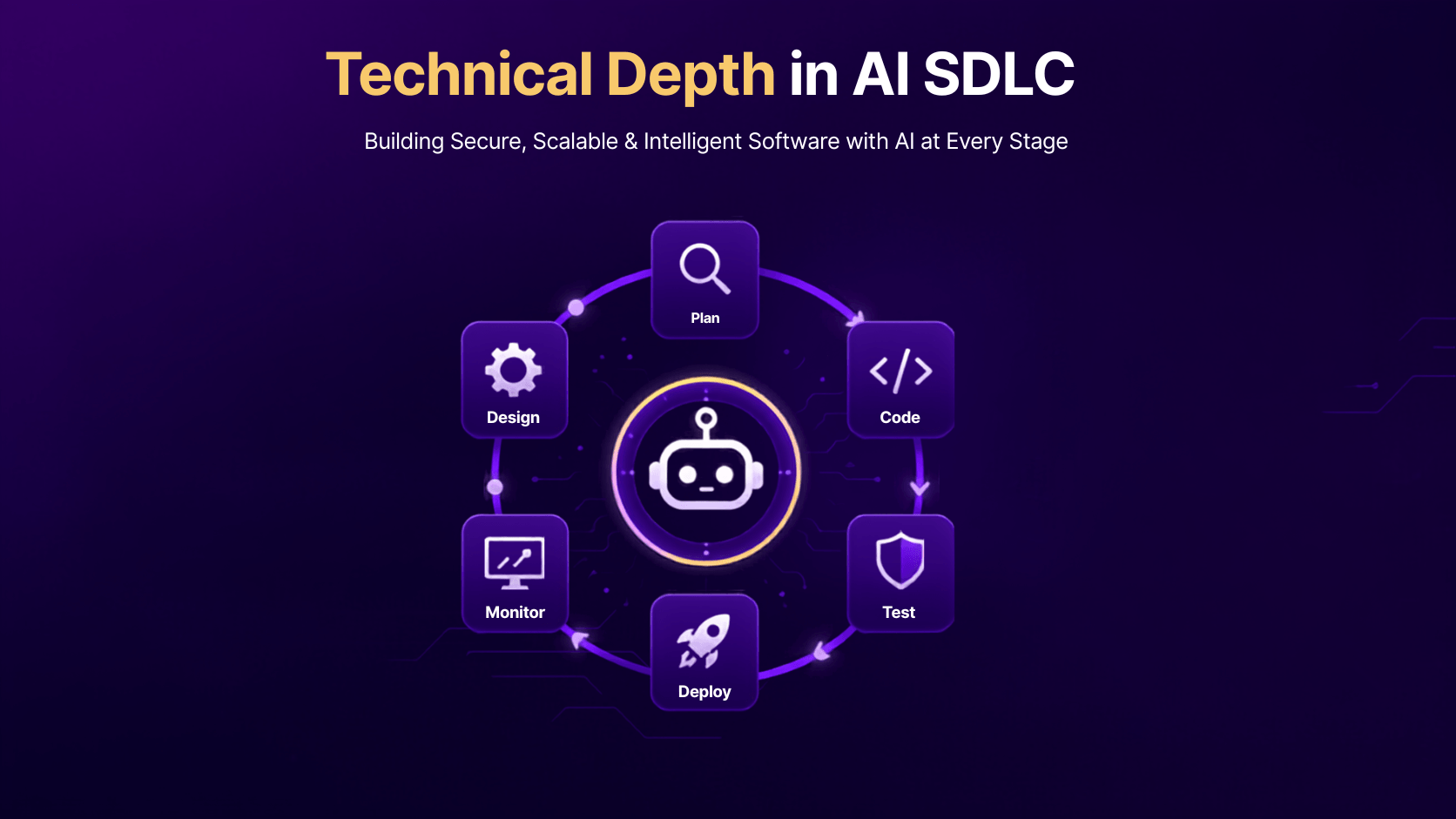
The Transformation from SDLC to AI-SDLC
What Amazon experienced is part of a broader transition happening across the industry.
Traditional SDLC was designed for human-speed development.
But as AI accelerates software creation, organizations are moving toward an AI-SDLC, where tools, processes, and governance frameworks operate at machine speed.
That transition requires more than AI coding assistants. It requires an intelligent control plane that coordinates architecture, security, compliance, and deployment governance across the entire lifecycle.
That is exactly what Opsera’s Agentic DevOps platform is designed to provide.
- For developers: pre-commit feedback that catches problems instantly without breaking development flow.
- For PR approvers: a complete, pre-analyzed review package — architecture diagrams, security findings, compliance status, and deployment risk profiles.
- For enterprises: governance infrastructure that makes AI-assisted development sustainable, with the audit trails and safeguards required by regulated industries.
The freeway of software development has already expanded. Now it’s time to upgrade the traffic management system to match.
What Enterprise Leaders Should Do Now
Not next quarter. This week.
- Assume AI is already writing production code in your organization.
It is. Whether you’ve officially adopted AI coding tools or not, developers are using them. - Ask your teams what governance exists around AI-generated code.
Not code review. Not “developers are responsible.” Actual automated gates that analyze architecture, security, and compliance risks. - Understand your blast radius.
Amazon’s incident reportedly affected hundreds of systems. Ask yourself: if a flawed AI-generated change reaches production, how many systems could it impact? - Identify what you’re still doing manually.
If architecture reviews, security checks, or compliance validation depend on humans remembering to run them, they are not safeguards — they are hopes.
Conclusion
Amazon’s pain here is real, and I respect how openly they’re addressing it.
But the lesson isn’t to slow down AI.
The lesson is simple: AI-speed development requires AI-speed governance.
The AI-SDLC needs the same rigor we spent the last twenty years building into the traditional SDLC.
The tools to do that now exist. We built them at Opsera.
The organizations that adopt them early will move faster and safer than everyone else. The ones that don’t may eventually find themselves holding their own “deep dive” meetings.