Meta Generated 220% More Code. Only 36% Became Features.
Meta’s AI-assisted code changes rose 220% while user-facing features rose just 36%. Here is where the 184-point gap went, and how to measure AI ROI in software development beyond output.
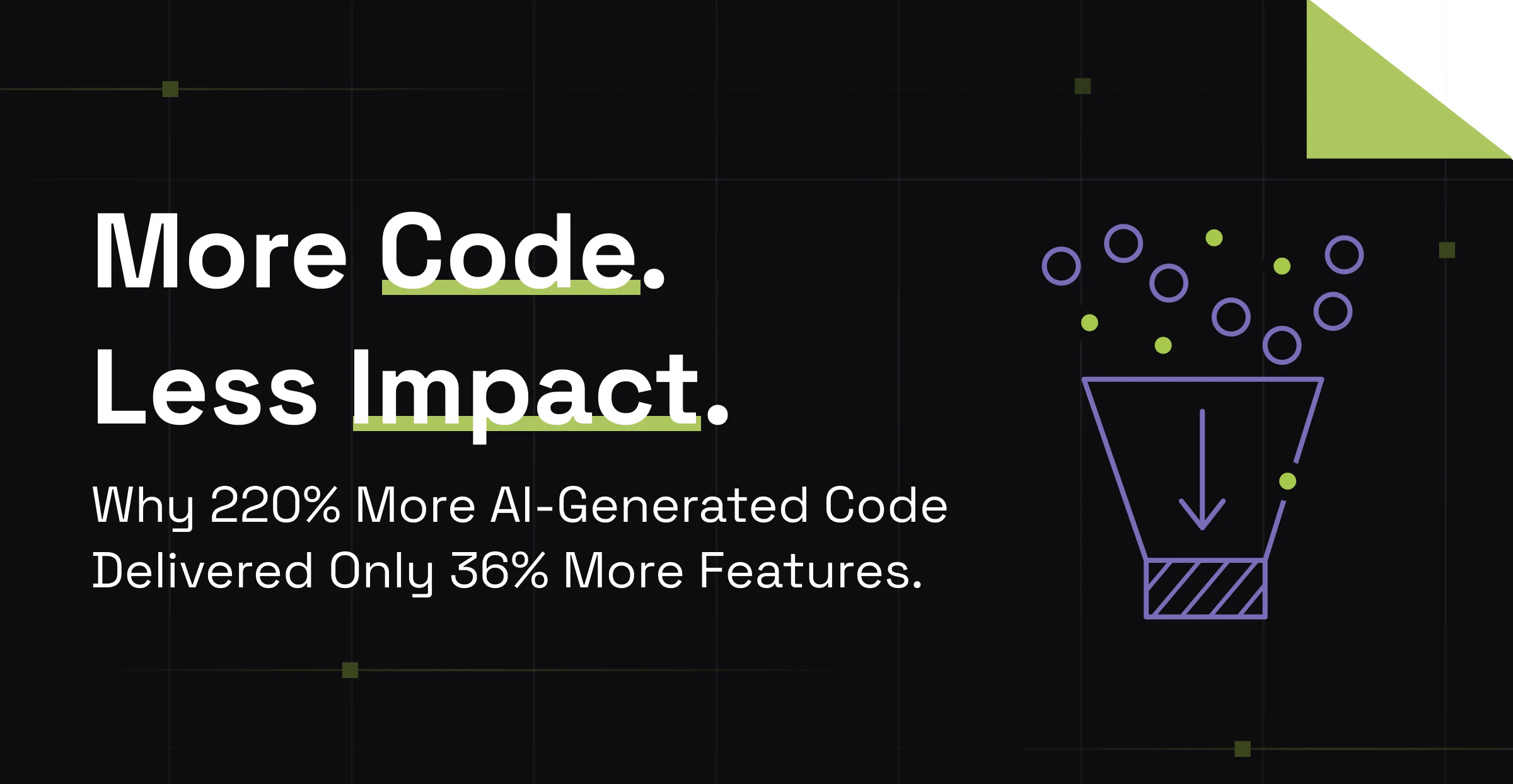
Recently, Meta Chief Technology Officer Andrew Bosworth told employees that AI-assisted code changes to Meta’s internal platforms had risen 220% year-over-year. Reuters later reported the number Bosworth’s post left out: user-facing feature delivery rose just 36% over the same period. That 184-point gap is where the real measurement problem lives, for Meta and for every enterprise running AI at scale.
Meta has more AI budget, more internal tooling, and more engineering scale than almost any company reading this, which makes the gap harder to dismiss. The same gap is waiting inside any organization that has accelerated code generation without speeding up the review, validation, and delivery work that turns code into a shipped feature. Opsera’s 2026 AI Coding Impact Benchmark Report data, gathered from more than 250,000 developers across 60-plus enterprises, backs this up directly. AI-generated pull requests wait 4.6 times longer for a first review than human-written code, and that delay sits almost entirely before review even starts.
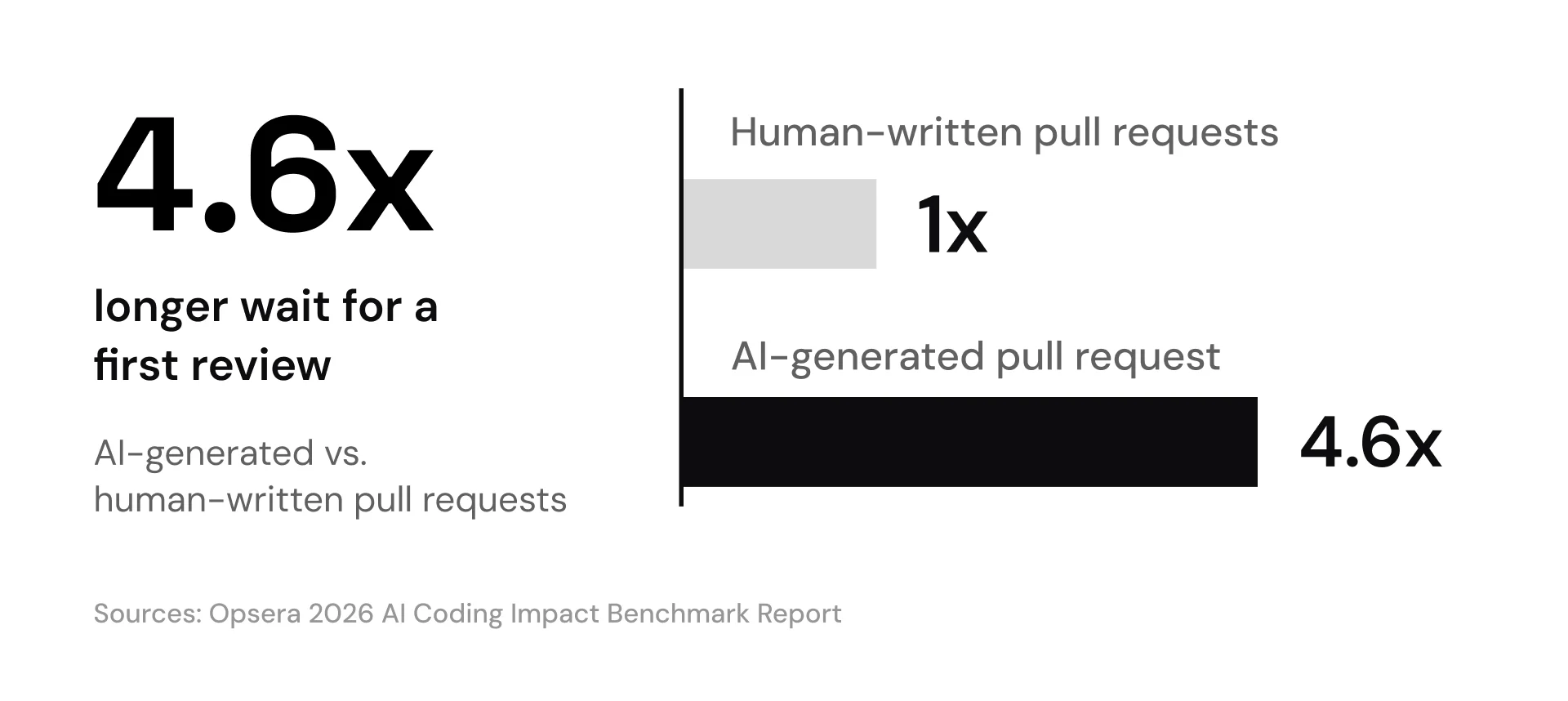
Where the Other 184 Points Went: Review, Rework, and a 40% Rise in Incidents
The 184-point gap between code volume and feature delivery didn’t disappear. Internal Meta data reviewed by Reuters shows where it went. Major technical and security incidents, including service disruptions and possible data leaks, rose 40% year-over-year in the same period AI-assisted code surged. The time employees spent responding to those incidents rose 70%. Employee sentiment toward the AI rollout fell from 74% favorable to 55% over the same window.
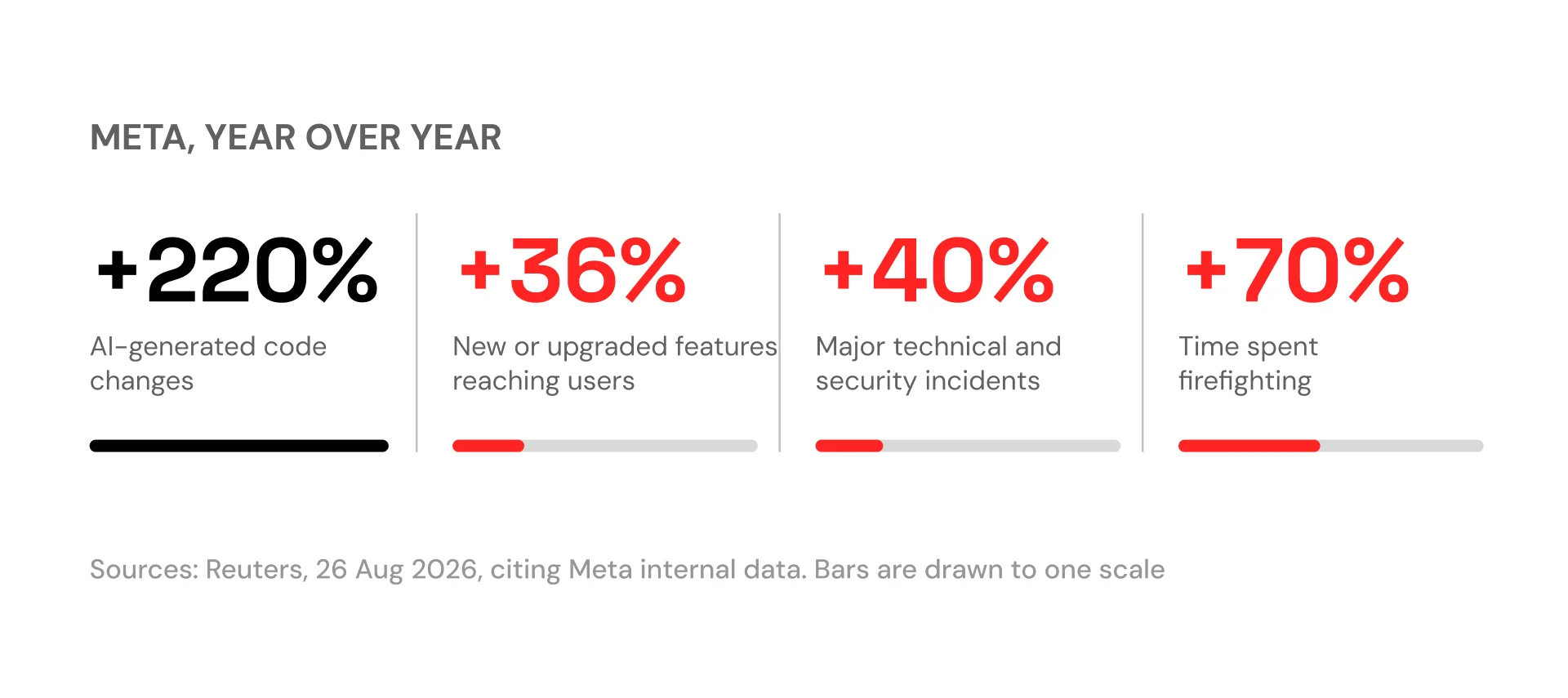
None of that shows up in a 220% code-output number. A team can generate more changes, open more pull requests, and still spend a significant share of every sprint reviewing that code, fixing what didn’t hold up, and responding to the incidents it caused. Machine-speed code generation doesn’t eliminate any of that work. Rather, it shifts work downstream, turning velocity gains into queue time.
Meta’s AI rollout wasn’t a failure of execution. It surfaced a measurement problem every enterprise adopting AI for software development now has to confront:
AI can dramatically increase software output without creating a proportional increase in software value.
The next phase of enterprise AI will not be defined by how much code organizations can generate. It will be defined by how effectively they turn that output into valuable, reliable, and adaptable software.
Activity Metrics Are Now Weak Proxies for Progress
Lines of code, pull requests, and deploy frequency worked as productivity proxies for a decade because engineering capacity was the binding constraint. When capacity was scarce, more activity reliably correlated with more delivered value. AI breaks that correlation. It removes the old constraint on how fast someone can write code, so those same metrics now measure speed the organization already has instead of value it still has to earn.
In AI-SDLC:
- Lines of code ≠ Productivity
- Pull requests ≠ Value
- Deployments ≠ Customer impact
- AI usage ≠ AI-enabled transformation
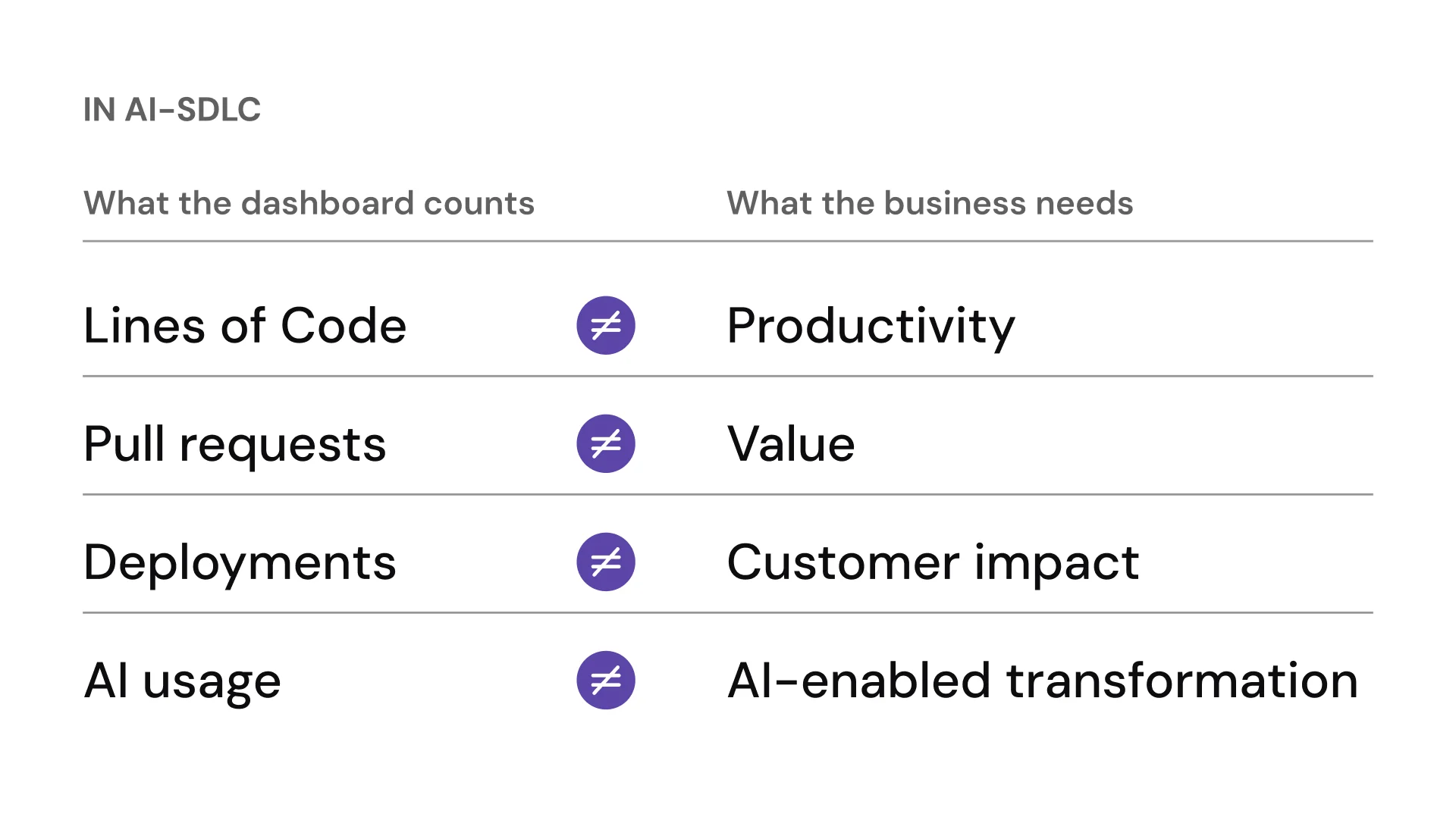
That reframes the question engineering and business leaders need to answer next. Nearly every enterprise has already cleared the adoption bar. The question worth asking now is whether that adoption is producing value the organization can measure, defend, and act on.
How to Measure AI ROI in Software Development
A measurement standard that only counts output will keep producing Meta’s problem at different scale. A standard built to catch it early has to track what happens to code after it’s written, not just how much of it gets written. Three things matter most:
- How long code takes to clear review and merge
- How much of it comes back as a defect or a rollback once it’s live
- How much of the AI capacity the organization is paying for is actually being used at meaningful depth
Enterprises that realize ROI aren’t the ones generating the most code. They’re the ones with visibility into those three numbers, because that visibility is what turns AI-generated output into software the business can actually trust and build on. That’s a different measurement discipline than counting output, and most organizations haven’t built it yet.
Most Measurement Stops at Stage Two
Most organizations track AI’s effect on software delivery in two stages: Adoption (whether developers are actually using the AI tools they’ve been given), and Throughput (whether that usage is producing more output). That’s where most measurement stops, and it’s also where Meta’s 220% figure lives. It’s a real number, but it only answers the first half of the question.
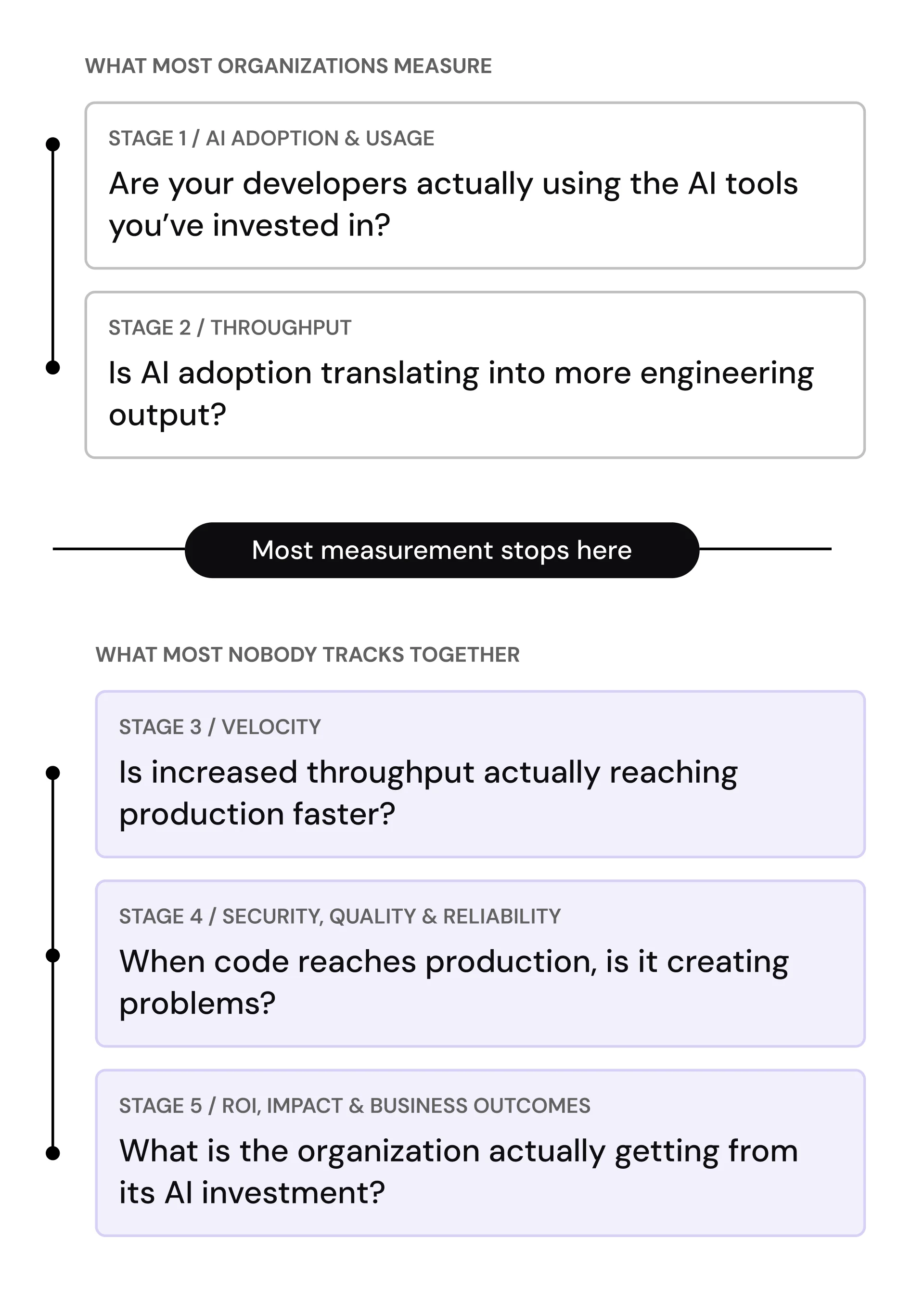
Three stages sit past it, and almost nobody is tracking them together.
- Velocity: Whether that increased throughput is reaching production faster, not just getting written faster.
- Security, Quality, and Reliability: Whether the code creates security, quality, or reliability problems once it gets there.
- ROI, Impact, and Business Outcomes: Whether any of it adds up to something the business can point to as returned value.
Opsera Unified Insights was built to close that gap, connecting AI usage data to what happens downstream, across the full delivery system, so leaders can see past throughput to what their AI investment is actually producing.
Recognized as a Leader in 2026 Gartner® Magic Quadrant™ for Developer Productivity Insights Platforms, Opsera Unified Insights shows exactly what you get for your AI investment, mapping every dollar spent to business results like DORA performance, SPACE productivity, and DevEx impact.
Final Thoughts
Measurement is hard because output and value got treated as the same thing for a decade, and nothing about that habit changes on its own. A dashboard won’t fix it. Neither will faster AI. The organizations that close this gap don’t do it by generating less code or slowing down adoption. They do it by building visibility into the step that used to be invisible: what happens to code between the moment it’s written and the moment it’s actually trusted enough to ship.
Want to know what you’re actually getting from your AI tooling investment? Book an AI ROI assessment now.
Questions.
Is there any ROI on AI in software development?
Yes, but it rarely shows up in output numbers. Meta’s AI-assisted code changes rose 220% while user-facing features rose just 36%, and major incidents rose 40%. ROI appears only when AI-generated code clears review, reaches production faster, and holds up once it is live, so it has to be measured beyond usage and throughput.
How do you measure AI ROI in software development?
Track what happens to code after it is written, not just how much gets written: how long code takes to clear review and merge, how much of it comes back as a defect or rollback once it is live, and how much of the AI capacity you pay for is used at meaningful depth. Then connect all five stages: adoption, throughput, velocity, security, quality, and reliability, and business outcomes.
Why doesn’t more AI-generated code mean more productivity?
Code output is only the first stage. AI shifts work downstream into review, rework, and incident response. In Opsera’s benchmark, AI-generated pull requests wait 4.6 times longer for a first review than human-written code, and at Meta, time spent responding to incidents rose 70%. Lines of code, pull requests, and deployments measure speed, not value.