

SpaceX’s $60 billion option to acquire Cursor is the clearest signal yet that AI coding has become strategic infrastructure. The velocity-control gap it exposes can only be closed by autonomous agents working inside the IDE, at the moment of code creation.
Susmitha Vakkalanka, CMO, Opsera
When SpaceX announced an option to acquire Cursor for $60 billion or alternatively pay $10 billion to deepen their technical collaboration, most of the news coverage framed it as a competitive move in the AI model race and Musk’s ambitions ahead of a historic IPO. That’s an accurate read, but it misses what actually matters for enterprise technology leaders.
The deal signals a fundamental transition of AI coding from a developer productivity tool into strategic infrastructure. The kind of infrastructure important enough that a company operating at the frontier of aerospace, satellite networks, and AI compute decides to own it, not just license.
From productivity tool to production system
For the past two years, AI coding has been evaluated primarily as a productivity investment. The ROI conversation centered on how much faster developers could ship, and most enterprises bought in on that basis. That framing no longer captures what is actually on the table.
When an AI coding platform is paired with a million-H100-equivalent supercomputer and tied to the strategic ambitions of a $1.75 trillion company, the nature of what enterprises are deploying changes.
Cursor’s own statement explains the logic clearly. The company had been “bottlenecked by compute” while developing their agentic coding models, such as Composer. Access to xAI’s Colossus supercomputer, roughly equivalent to one million H100 GPUs, removes that ceiling entirely. The models Cursor can train with that kind of infrastructure are not just incrementally better than what enterprises are using today. The gap is categorical. If the current generation of AI coding tools already generates substantial share of enterprise code, the next generation, trained at Colossus scale, rewrites the equation completely.
At that scale, enterprises are no longer deploying a productivity tool, they are deploying a production system that generates code at volumes no enterprise software process was designed to absorb.
This is the part most enterprises haven’t fully priced into their planning.
The velocity-control gap was already a problem. It just became an emergency.
The velocity-control gap is already showing up in production data. Opsera’s 2026 AI Coding Impact Benchmark Report, drawn from more than 250,000 developers across 60+ enterprise organizations, puts numbers on what many engineering leaders are already sensing.
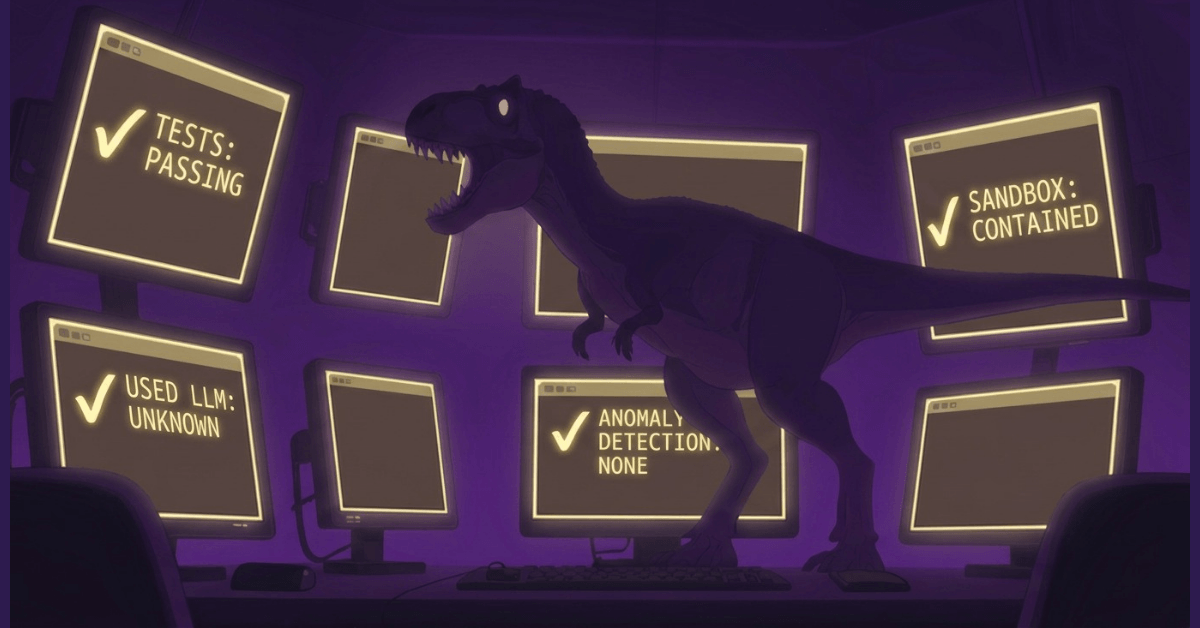
AI reliably reduces Time-to-PR by 48–58%, but those inner-loop velocity gains stall at review. AI-generated PRs wait 4.6x longer for review. Separately, AI-generated code carries 15–18% more security vulnerabilities than human-written code across all industries. These flaws are largely invisible during initial delivery because they pass tests and evade manual review, surfacing later when remediation costs significantly more.
When the outer-loop architecture review, security scanning, compliance validation, deployment governance still operate on cadences built for human-authored code, AI shifts work downstream instead of increasing throughput.
With the compute unlock Cursor is now partnered to access, the gap between how fast code gets created and how fast it gets controlled is only going to strain further. Building toward a post-Colossus AI coding without addressing that gap is the defining operational risk of the next several years. Every CIO, CTO, and CISO will eventually be measured on how well they closed this gap.
Why the control layer has to live in the IDE
The market has produced extraordinary tools for the velocity layer. Cursor, GitHub Copilot, and others have made code generation faster, more contextual, and increasingly autonomous, and frontier compute will only accelerate that race.
What hasn’t kept pace is the control layer, the autonomous, embedded, pre-commit enforcement of security, compliance, and architectural standards, that determines whether AI coding actually delivers enterprise value or simply generates a larger cleanup bill downstream.
That layer cannot live in late-stage review, in a separate tool the developer has to remember to run, or in a quarterly audit. It has to live inside the IDE, at the moment of code creation, with autonomous agents that can not only detect issues but remediate them before a single line is committed.
This is the conviction behind our partnership with Cursor. The Opsera DevSecOps plugin, available now in the Cursor Marketplace, embeds autonomous agents directly into the developer environment, enforcing security, compliance, and architectural guardrails before code is ever committed. The agents operate at the same layer where code is being generated, not downstream from it, making velocity layer and the control layer work as a single system.
When Cursor scales on Colossus-class compute and code generation accelerates further, the governance infrastructure scales with it because it is embedded in the same environment, not waiting at a gate downstream.
The bottom line
The SpaceX-Cursor deal is the clearest signal yet that AI coding has crossed the threshold from feature to infrastructure. That’s good news for every enterprise that wants to ship faster.
It’s only good news, though, if the control layer keeps up.
Frontier velocity demands frontier control. That’s the operating model the AI-SDLC era will be built on, and the one we’re building with Cursor today.
The Opsera plug-in for Cursor is available now in the Cursor Marketplace. One click installs autonomous AI agents that enforce security, compliance, and architectural standards from the first line of code.