From Enterprise Intent to Governed Autonomous Change

How Fortune 500 technology leaders can move from AI experimentation to safe, scalable software and operations execution.
AI has collapsed the cost of creating software change, but not the cost of governing it. Most Fortune 500 enterprises can now generate software faster than they can responsibly understand or control it — the real gap isn't adoption, it's governance.
This guide lays out the operating model for closing that gap: a reference architecture, a 4-level maturity model, and a 12–24 month roadmap for turning AI velocity into a machine-understandable, policy-governed technology estate — built for CIOs, CTOs, and engineering leaders.
What's Inside?
Fragmented Tools Lack Unified Governance
Current AI coding assistants, low-code platforms, and DevOps tools each solve a fragment of the problem — none connects business intent, system understanding, policy, and execution into one governed layer
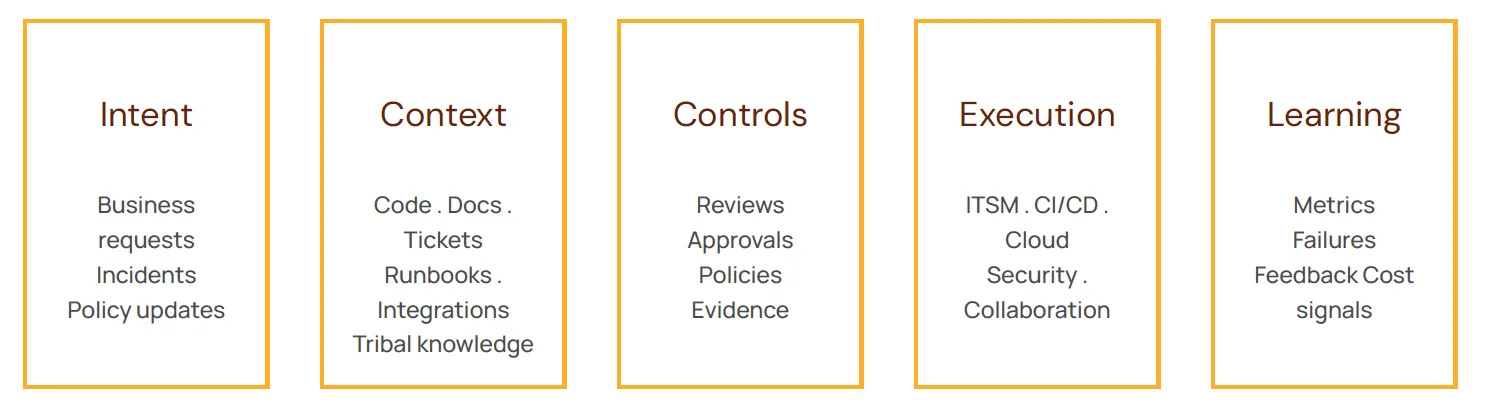
A Control Plane Unifies Existing Stacks
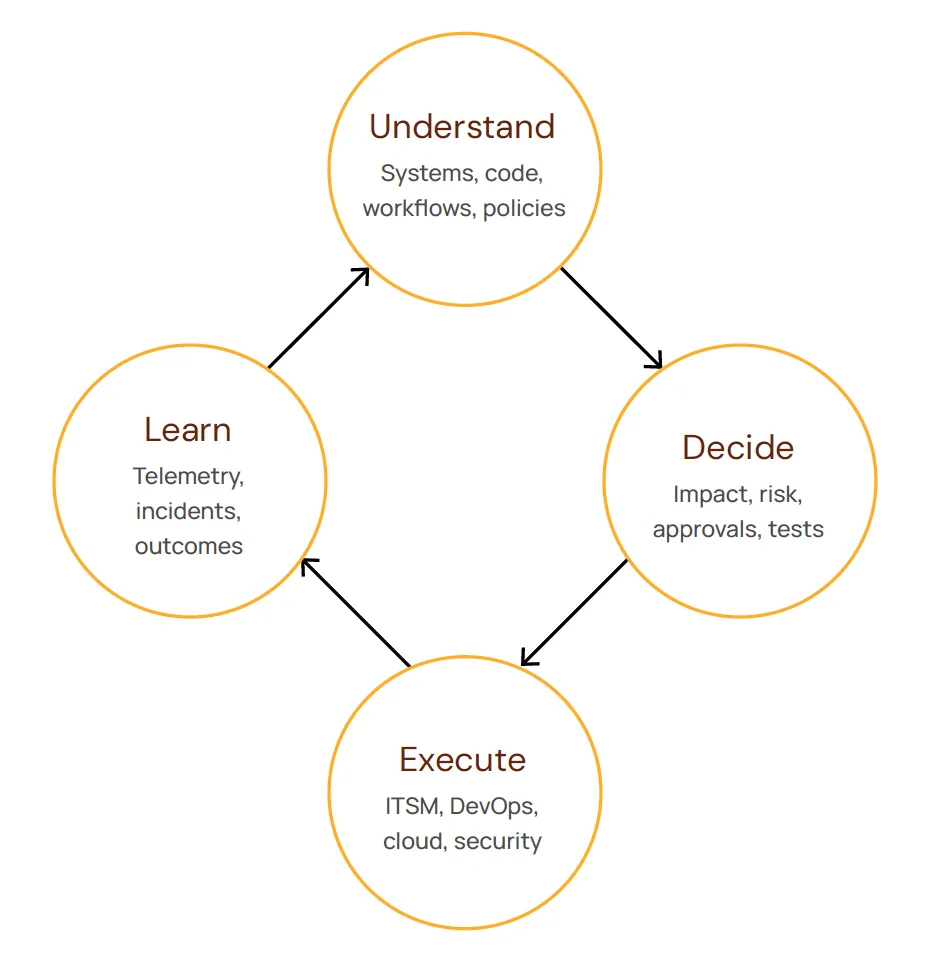
Enterprises don't need to replace their existing stack. They need a control plane above it: understand the estate, decide how change should happen, execute through existing tools, and learn from outcomes in a closed loop
The 4-Stage Maturity Model Roadmap
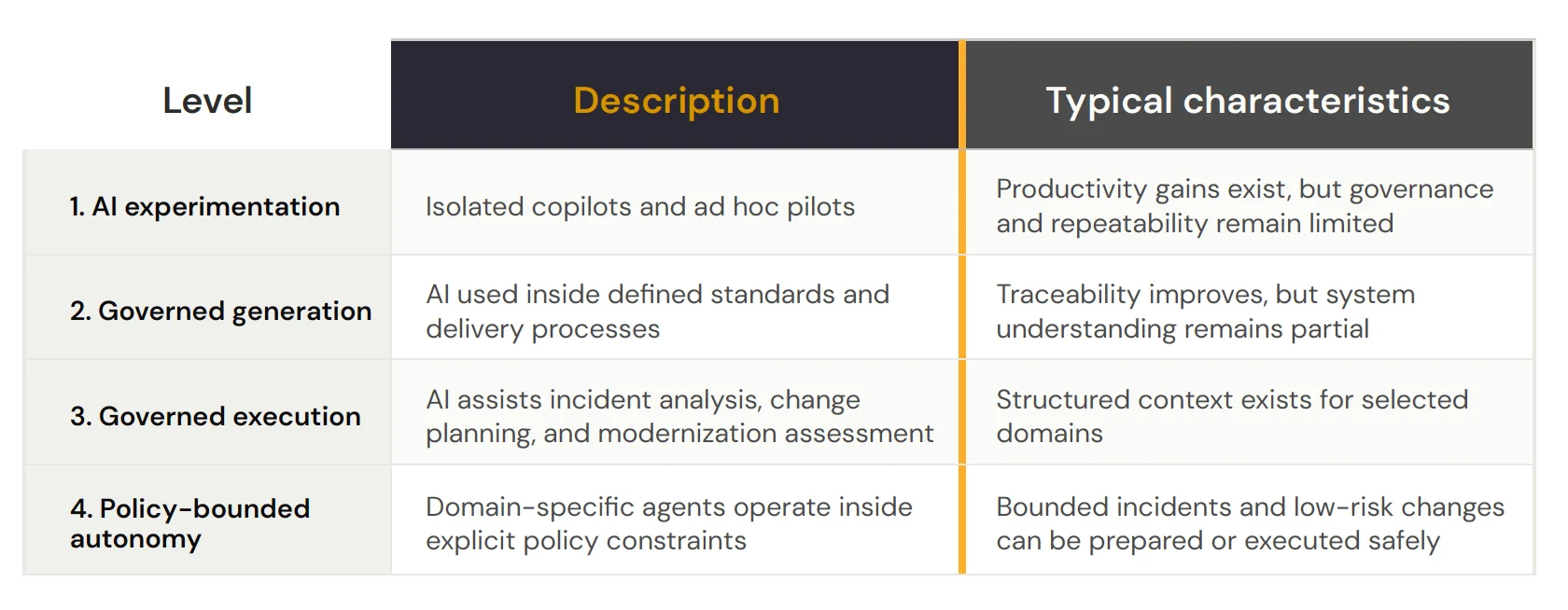
Get the 4-stage maturity model — from ad hoc AI experimentation to policy-bounded autonomy — and the roadmap for moving through it deliberately, starting with one or two high-friction domains
Author













Authors.
 Roman VorelVice President, Head of Enterprise Technology & Employee Experience, PayPal