Grok Brings Speed. Opsera Brings Context and Control.
Opsera is a launch partner in the SpaceX Super Intelligence Partner Network, helping enterprises turn legacy complexity into modernization advantage.
Opsera is a launch partner in the SpaceX Super Intelligence Partner Network, helping enterprises turn legacy complexity into modernization advantage.
Writing code is no longer the slow part. A model can build a working prototype in an afternoon, yet the core applications most large companies have put off modernizing for years are still waiting, because nobody can say with confidence what the old system does.
That’s why Opsera joined the SpaceX Super Intelligence Partner Network as a launch partner to work together on helping organizations turn legacy complexity and enterprise intelligence into governed, AI-accelerated software delivery. This post covers what each side brings to the problem, and what it means for enterprises.
A Better Model Doesn’t Close the Gap
Every time a general-purpose model starts a task, it knows nothing about your systems, your rules, or what "done" means for your company. Engineers explain it again, prompt after prompt, and the model guesses at whatever is left. The guesses turn into rework, higher token bills, and risk nobody planned for.
Large companies need two things a model can't supply for itself. The first is context: a reliable record of what their systems do and why. The second is controls: rules checked before code is written, and a person accountable for what ships. That's the split in this partnership. They bring frontier models, and the speed that comes with them. We bring the enterprise context and controls that turn that speed into business value.
Where the Partnership Fits
SpaceX SI Partner Network runs on two tracks. Transformation Partners help customers roll out Grok across their organizations, and Marketplace Partners build plugins and integrations that connect Grok to the tools customers already use. Opsera is a Marketplace Partner.
For customers who already run Opsera Forge, our governed, spec-driven software factory, Grok connects through the IDE integrations, so developers work with it in the tools they already use.
Context: Giving the Model Something to Work From
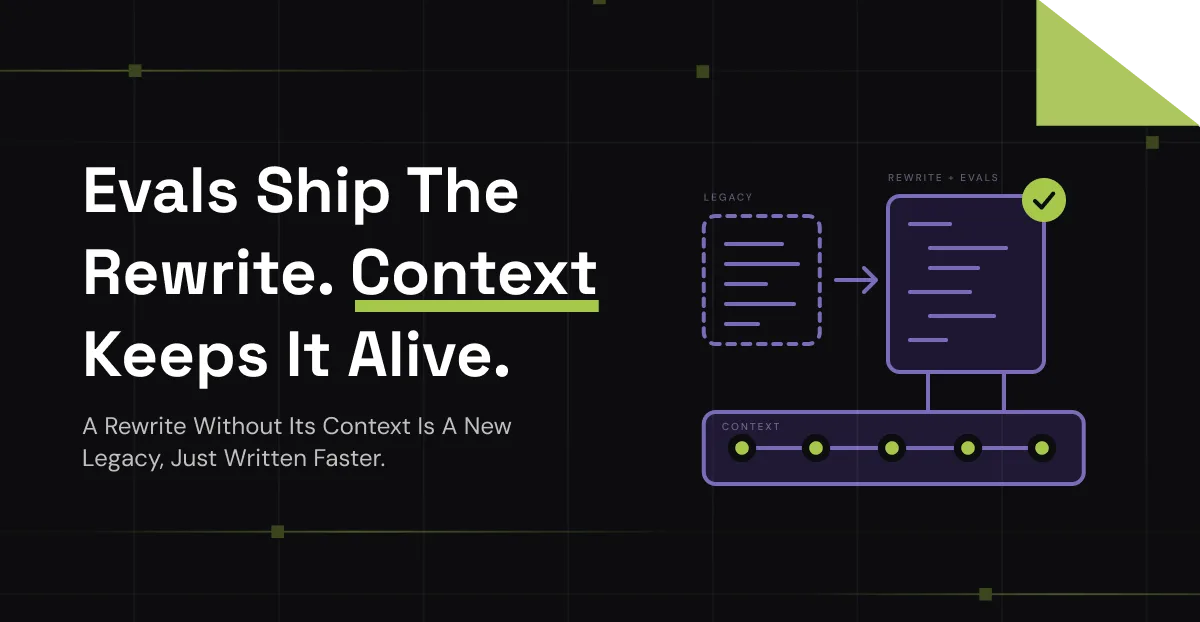
Forge starts by reading the codebase and writing down what it does: the business rules, the structure, and how the pieces depend on each other. We call these records Living Specs. They're versioned, they stay attached to the code, and both people and AI agents can use them. Without that record, every team starts by re-explaining the system. With it, the next project starts from what the last one learned instead of from a blank prompt.
Controls: Why Governance Gets the Model Near Core Systems
Context tells the model what a system does. Controls decide what it's allowed to change. In Forge, policy and security rules are checked before code is written, not after. A human-in-the-loop approves every change, whether a developer or an AI agent proposed it. And every change leaves a record of what it was for, what tested it, and who signed off. That record belongs to the customer, not to us and not to the model vendor.
What This Makes Possible: Modernization That Starts with Evidence
With context and controls in place, an AI model can work on legacy systems it couldn't be trusted with before. Forge does it in two steps. First, it understands the old system: it maps the code and its dependencies, then gives each application a ForgeScore, a readiness score that shows which one to tackle first and the safest order to follow. Then it rebuilds in small pieces, each with clear acceptance criteria and reviewed by an engineer before anything ships. Your architects set the direction. Grok, or any model you connect, does the work inside those lines.
The results so far come from specific programs. Belcorp brought work across legacy systems, data pipelines, and analytics from two to six weeks down to about an hour on average. Years to months is the goal we're working toward with Grok, and a ForgeScore is how you find out where your own estate stands before you commit.
What It Looks Like: Eight Weeks of Planning in Under Three Hours
| <3 hours | ~50 | ~$250K |
|---|---|---|
| to a development-ready plan, vs. about 8 weeks scoped for planning | work orders generated from one source | projected savings |
A global beauty and personal-care retailer needed to modernize a legacy application documented only by ambiguous XML examples, and scoped the planning alone at about eight weeks. Working through the XML with Opsera Forge, its engineers had a development-ready plan in under 3 hours, with projected savings of about $250K. The plan included requirements, an architecture, a modernization assessment (ForgeScore), and about 50 work orders. The work orders then went to the developers, who started building with their existing AI model.
The Bottom Line
The hard part of enterprise AI was never access to a good model. Frontier labs will keep shipping better ones, and your competitors will have them too. What differs is what the model knows about your organization, and what it's allowed to do inside it. That's the gap Forge is built to close, and it's why this partnership fits.
For customers, that means modernization work that has sat on the shelf for years can go back on the calendar, with security and oversight intact, and a clearer path from AI pilot to measurable business results.
Thank you to the SpaceX Super Intelligence team for building this program with partners from day one. We're proud to be in the first group of 130+ companies, and we're looking forward to delivering for customers together.
Start with one application, whether it's a legacy system or a new build. Forge maps the scope and shows you the specs it would produce before you commit to anything.
Schedule a demo to see it on your own codebase
If your teams already work with Grok, the Grok plugin is the quickest way to see how it connects.
You can also read the announcement.