What Your AI Coding Tool Doesn’t Know Is Costing You More Than You Think
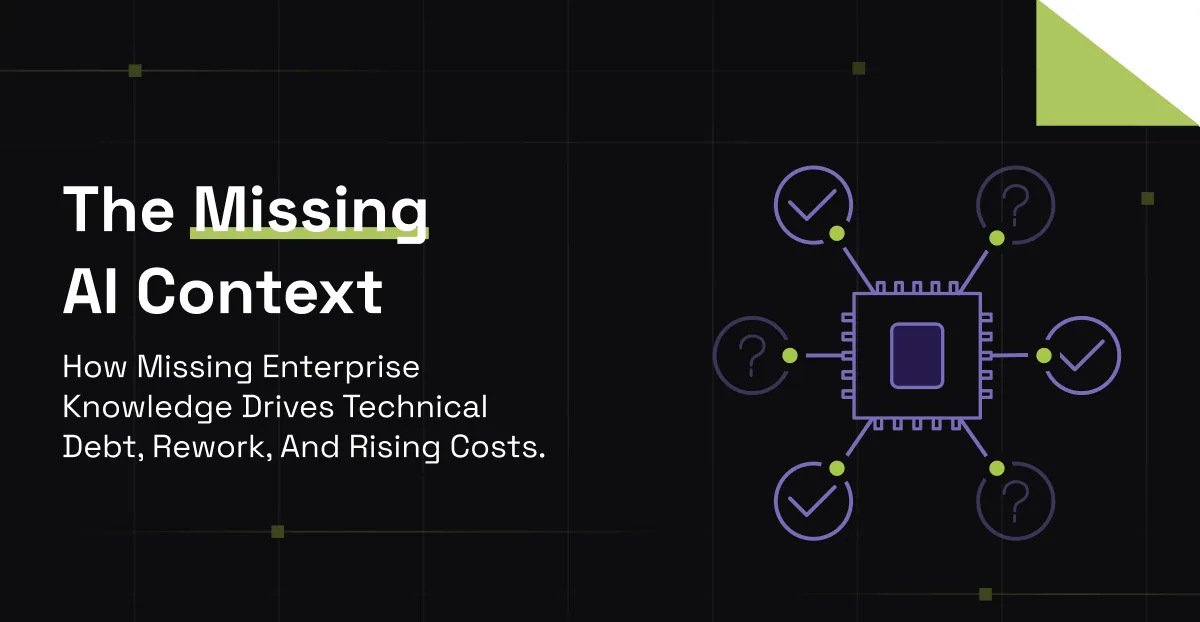
Most AI coding tools start from a prompt and a few open files. Here is how missing context turns into wasted tokens, repeated work, inherited technical debt, and rising maintenance cost, and what context engineering changes.
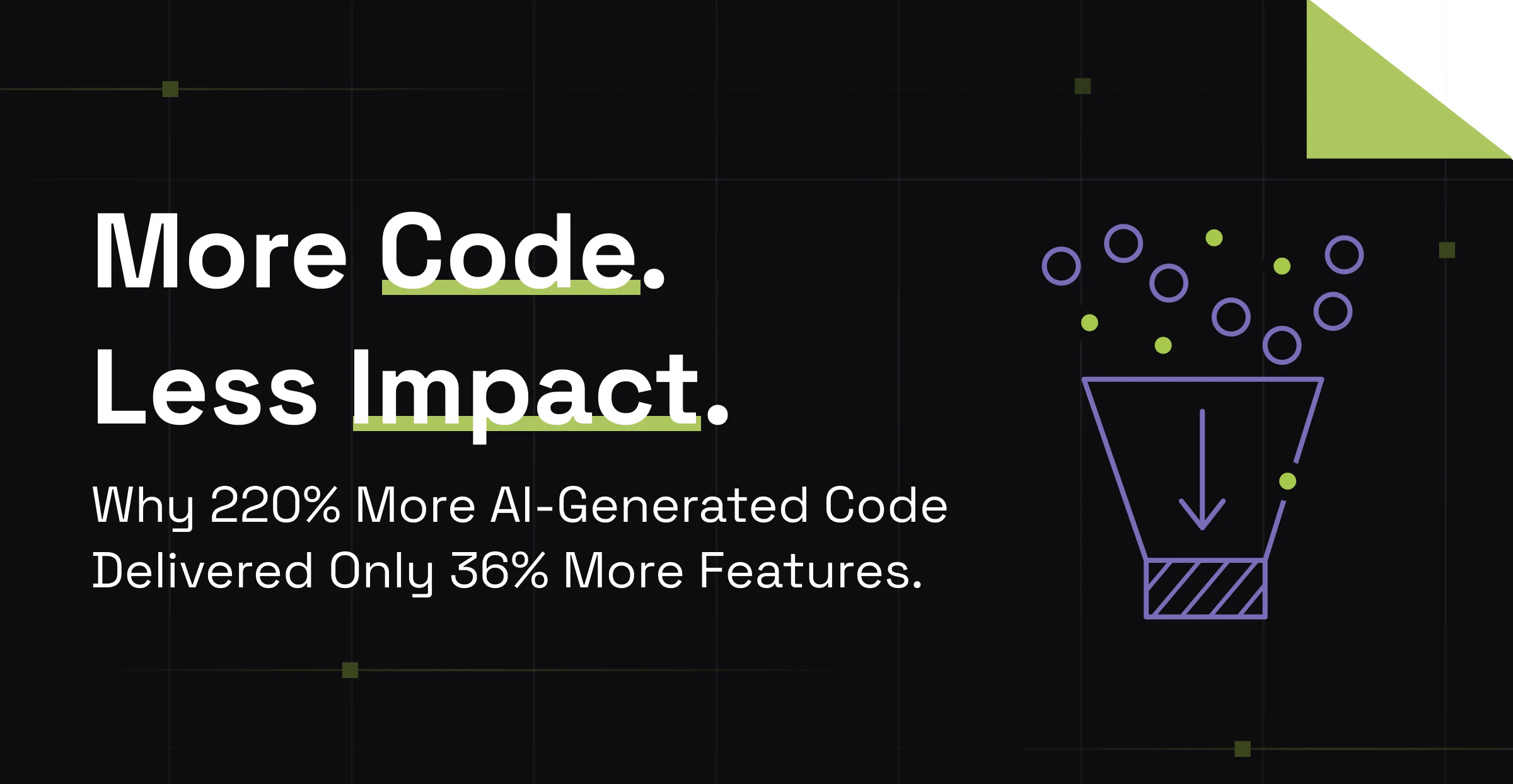
This is Part 2 of the two-part series. Part 1 looked at Meta, where AI-assisted code changes rose 220% while user-facing features rose just 36%, and followed AI-generated code after it was written, from adoption and throughput through quality, reliability, and business outcomes. Opsera Unified Insights reads that whole path from one dataset. Part 2 goes to the other end of the same loop: what an AI knows before it writes anything, and how that feeds everything Part 1 measured.
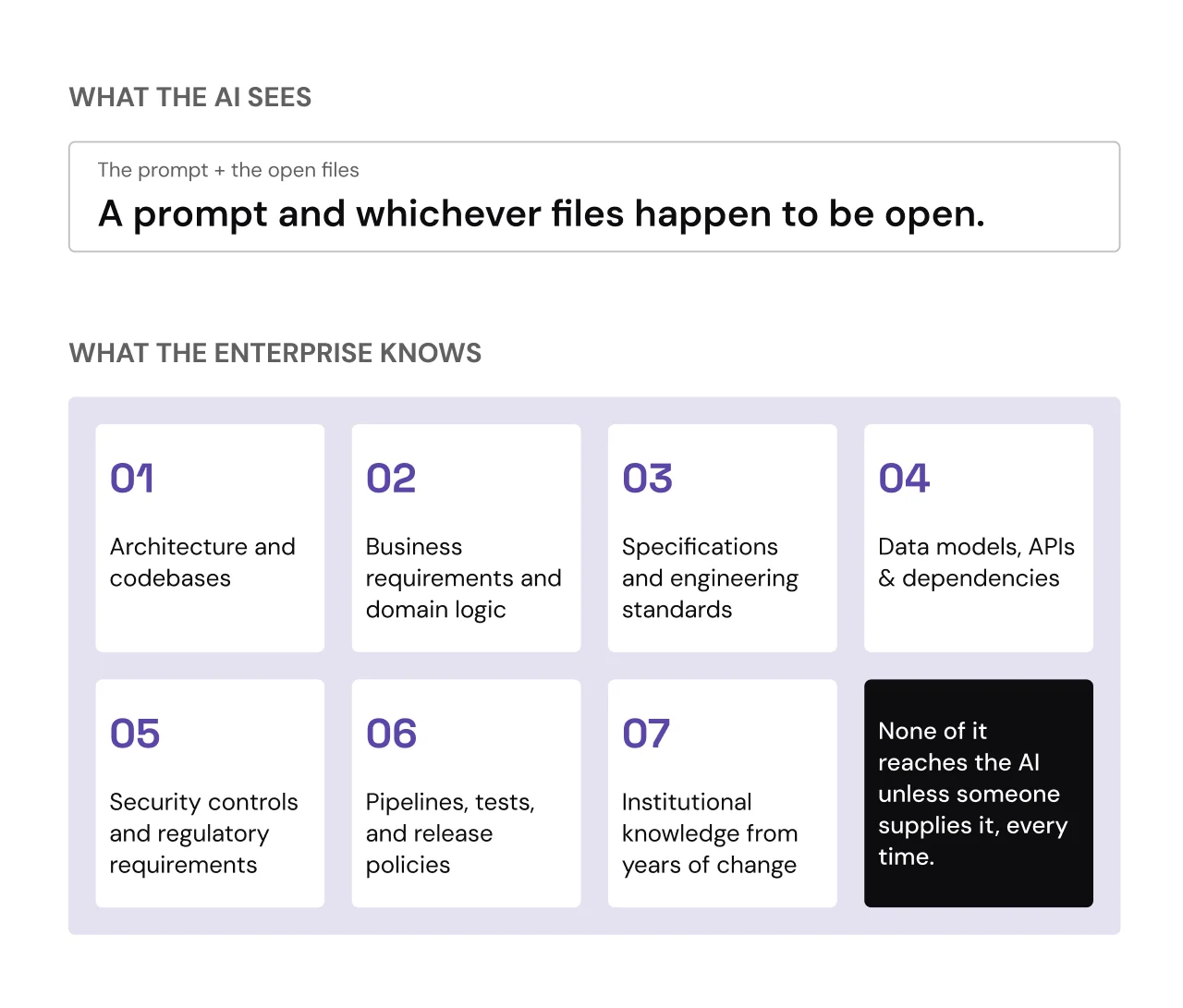
Most AI coding tools begin a task knowing very little about the enterprise around it. They just see the prompt and the files that happen to be open. The architecture the change has to fit, the business rules behind the module being edited, and the standards a reviewer will apply all sit outside the frame. The code that comes back usually works on its own terms. Whether it fits the system it lands in gets settled later, in review, in testing, and sometimes in production. AI already supplies the speed. Context engineering, the practice of giving an AI what the enterprise already knows before it writes anything, decides how much of that speed turns into software the business can use.
Context Engineering Is the Constraint on AI Coding
Enterprise software does not live in a prompt. It lives across:
- Existing application architecture and codebases
- Business requirements and domain logic
- Specifications, design decisions, and engineering standards
- Data models, APIs, and integration dependencies
- Security controls and regulatory requirements
- Delivery pipelines, environments, tests, and release policies
- Institutional knowledge accumulated over years of change
An AI coding assistant working from a prompt has access to none of this context unless someone supplies it, every time, for every task.
Without this context, an AI agent can produce syntactically correct code that is architecturally inconsistent, operationally risky, poorly aligned to the business need, or expensive to maintain. The code works until something downstream shows it was built on a guess.
The Bill for Missing Context Arrives Later
Missing context shows up as cost in four recognizable forms:
- The hallucination tax. Most AI coding tools start a task from a context baseline of zero. With no knowledge of the enterprise’s constraints, the model fills the gaps with plausible guesses about how systems connect and which rules apply. Every wrong guess costs tokens to regenerate and reviewer time to catch, and the ones nobody catches carry security and compliance exposure into production.
- The recontextualization tax. Teams try to close the context gap by hand, pasting in architecture notes, restating business rules, and reminding the tool of standards it applied correctly yesterday. The tools cannot retain any of it, so the work repeats with every session, every new developer, and every model update.
- The legacy code tax. Decade-old codebases often come with no documentation and depend on knowledge held by a handful of engineers. Handed to an AI tool, they get read from the code alone, so the tool replicates structural flaws it finds and duplicates logic that already exists elsewhere.
- The maintenance tax. Keeping older systems running already takes a large share of engineering budgets, which leaves less to build with. AI-generated code that adds duplication and inherited flaws to that estate raises the cost of every later change.
Specifications and Guardrails Matter as Much as Code Generation
Context describes what is already true about the system. An AI also needs to know what it is being asked to build and where the limits are. Specifications and guardrails supply that, and they matter as much as the code generation itself.
- A specification gives the AI a clear definition of what to build, why it matters, which systems the change touches, and what “done” has to mean. Written in a form both people and AI can read, and kept current as the software changes, it works as a shared contract between the engineers who design a change and the AI that carries it out.
- Guardrails establish the boundaries within which AI can act. They cover the approved patterns, security requirements, testing expectations, architectural standards, and compliance controls a change has to meet, along with the points where a human in the loop reviews and approves before work moves on.
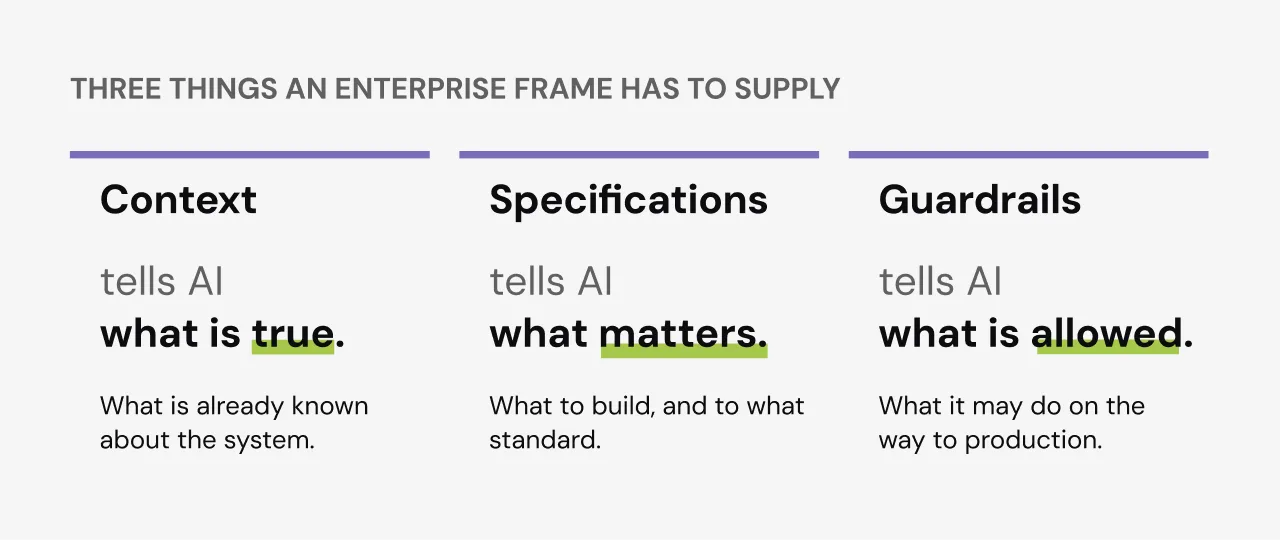
Context tells AI what is true. Specifications tell AI what matters. Guardrails tell AI what is allowed.
Together they make AI’s speed usable in the enterprise. Teams can keep using whichever coding assistant and model they prefer, because the frame stays the same. Producing and maintaining all of this across a large estate takes a system built for the job.
From Software Intelligence to Governed Software
Engineering leaders need visibility into where software complexity, fragile dependencies, technical debt, and delivery friction are limiting change. But insight alone is not enough.
Knowing where the bottleneck is does not remove it.
The next step is giving AI the context, intent, specifications, and control to accelerate the right work, not simply more work.
Opsera Unified Insights, the software engineering intelligence and Developer Productivity Insight Platform, helps leaders understand how AI adoption is affecting the whole delivery system, across engineering flow, quality, delivery performance, operational reliability, and business outcomes. It makes visible where AI is creating leverage and where it is adding to existing complexity.
Opsera Forge, the enterprise software factory, is where that understanding goes to work.
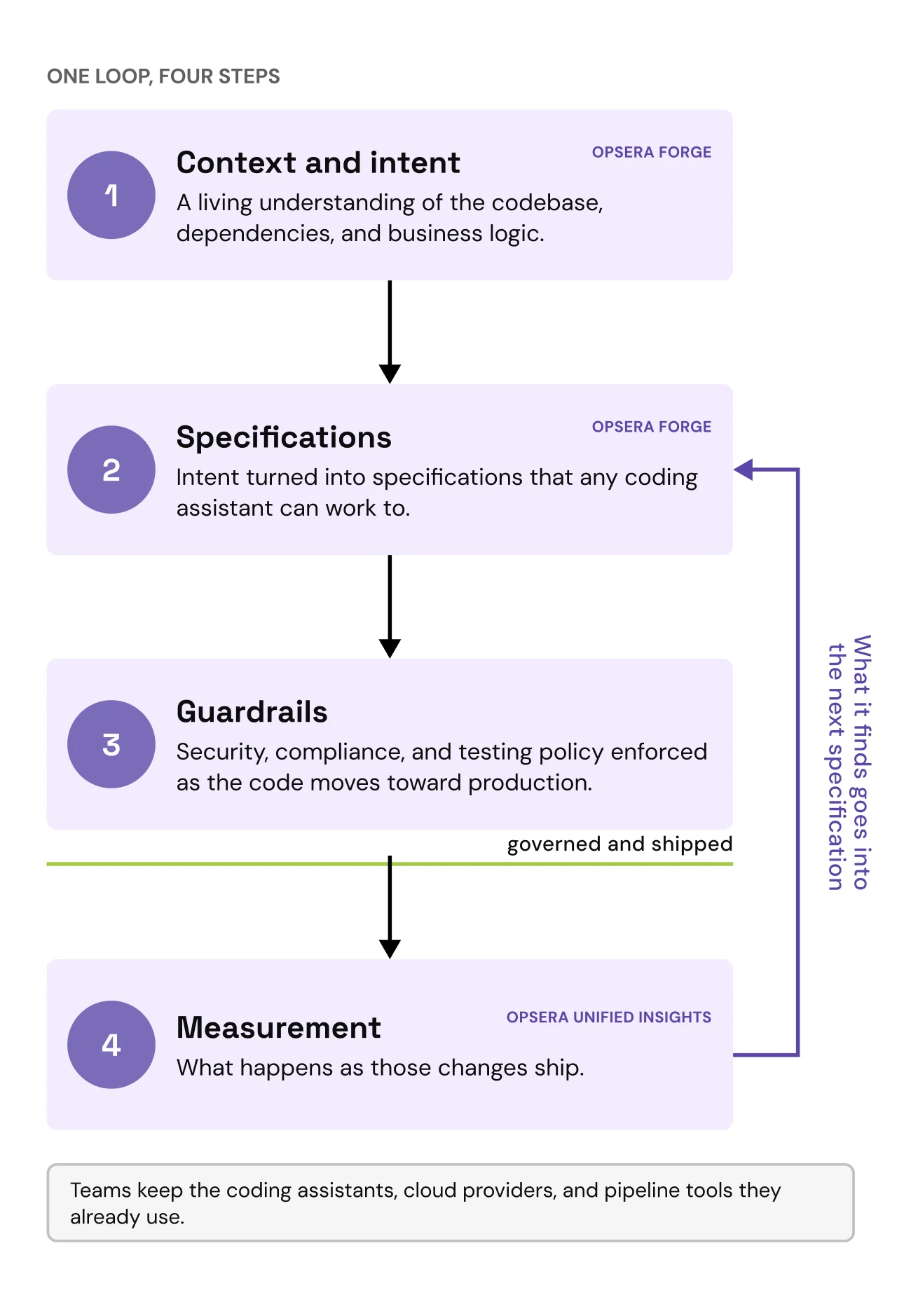
The two operate as one loop. Forge builds a living understanding of the codebase, its dependencies, and its business logic, then turns intent into specifications that any coding assistant can work to. Guardrails enforce security, compliance, and testing policy as the code moves toward production. Unified Insights measures what happens as those changes ship, and what it finds goes back into the next specification. Teams keep the coding assistants, cloud providers, and pipeline tools they already use.
For New Software, the Specification Comes Before the Code
Forge captures business intent in natural language and turns it into structured requirements and architecture flows before any code is generated. The coding assistant then works inside the boundaries those artifacts set, with standards, security requirements, and test expectations already defined. The application starts aligned with enterprise standards and stays aligned as it scales.
For Modernization, Understanding the System Comes Before Changing It
Existing systems hold years of business logic that was never written down. Forge extracts that logic, along with the dependencies and architecture around it, and captures it as specifications that stay current as the code changes. Teams see what the system does and what depends on it before they ask AI to transform any of it.
In both cases the AI coding assistant keeps supplying the speed, and Forge supplies the enterprise context, specifications, and governance that make that speed valuable.
Build Enterprise Software Ready for Change
Organizations must aim to direct AI toward changes that improve the software estate rather than creating the next generation of technical debt. Not every application is equally ready for AI-accelerated change. Some are modular, well-documented, and resilient, and they can absorb fast change. Others carry hidden dependencies, outdated patterns, accumulated complexity, and business logic that exists nowhere except in the code itself. The same AI acceleration produces very different results on each.
Before accelerating change, enterprises need to understand whether the application can absorb that change safely and where AI will create advantage versus risk.
ForgeScore gives teams that baseline before change begins. It assesses an application’s health, complexity, resilience, and adaptability across eight dimensions, helping engineering leaders decide where to build, where to modernize, and where AI can safely speed things up.
- For existing applications, ForgeScore surfaces the complexity, technical debt, and institutional knowledge trapped in the code, enabling streamlined modernization efforts.
- For new applications, ForgeScore establishes an early standard, so AI-accelerated development produces software that is built to evolve with change.
Final Thoughts
Meta operates at a scale and level of AI investment most enterprises will not reach. But the underlying lesson is universal. As AI makes software easier to produce, generating code becomes a smaller source of competitive advantage. What grows scarce is everything around the code: enterprise context, clear specifications, sound engineering judgment, and governance that holds up at scale, along with the ability to turn software change into business outcomes.
The enterprises that lead in the AI era will be the ones that give AI the context to understand their software and the governance to change it safely, with clear specifications defining what gets built.
See where your applications stand before AI touches them. ForgeScore assesses your software across eight dimensions, so you know where AI can safely accelerate change and where it can’t yet.